
























Why Female Foot Anatomy Changes Soccer-Cleat Fit
A complete Women’s Soccer Cleats Shopping Guide for Better Fits must explain why simply resizing a cleat designed around a male foot may not produce the right fit for a female player.
Women do not merely have smaller versions of men’s feet. Although every athlete is different, female feet commonly have a more triangular shape, with a wider forefoot and toe-box area in relation to a narrower heel. Male feet tend to have a more rectangular heel-to-forefoot relationship.
This difference can create a frustrating choice in traditionally designed cleats. A player may find a size that gives her toes enough room but allows her heel to lift and slide. If she sizes down to secure the heel, the same model may squeeze her toes and forefoot.
Other commonly observed differences include:
- A wider toe-box-to-heel ratio
- A narrower heel cup
- A different location for the widest part of the forefoot
- Higher arches on average
- Different pressure patterns through the foot
- Biomechanical differences that affect movement from the foot through the ankle, knee, and hip
This is why women-specific soccer footwear is about more than color or sizing. The shape of the last—the three-dimensional mold around which a shoe is built—determines how the heel, arch, midfoot, and toes sit inside the cleat.
A women-specific last can provide room where many female players need it while keeping the heel secure during acceleration, planting, and changes of direction.
How Laura Youngson Built IDA Sports From the Ground Up
IDA Sports began after co-founder Laura Youngson led a group of women up Mount Kilimanjaro in 2017 to play a record-breaking soccer match and highlight inequality in sports. During the experience, Laura learned that the women were playing in cleats built primarily for men or children. Many of the players continued experiencing foot pain after the match.
According to the official IDA Sports story, that experience led Laura to investigate the differences between male and female feet and the lack of soccer footwear designed specifically around women’s anatomy.
Laura and co-founder Ben Sandhu did not begin with an existing men’s cleat and change its size or colors. They assembled footwear professionals and worked with podiatrists, physiotherapists, coaches, sports-medicine professionals, and nearly 1,000 female athletes to develop and test a women-specific soccer cleat from the ground up.
The research and testing process focused on several connected priorities:
- Creating a wider toe box in relation to the heel
- Building a narrower heel cup to reduce unwanted movement
- Supporting common female arch characteristics
- Studying pressure distribution under the foot
- Developing a stud pattern around female biomechanics
- Balancing traction with the ability to rotate and release
- Improving comfort without sacrificing responsiveness
- Supporting performance while addressing injury-related concerns
The result was not simply a women’s colorway. It was a cleat constructed on a female-specific last and developed around the way women’s feet commonly fit, load, and move.
Why ACL Injury Risk Was Part of the Design Conversation
Fit and performance were important goals, but injury-risk mitigation was also a central part of IDA’s design approach.
A systematic review and meta-analysis published in the British Journal of Sports Medicine found that the rate of ACL injuries among female soccer players was approximately 2.2 times higher than the rate among male players. The research is available through the National Library of Medicine’s PubMed database.
ACL injuries have multiple contributing factors. Anatomy, strength, movement patterns, fatigue, playing conditions, training load, hormones, and previous injuries may all be involved. No soccer cleat can prevent every ACL tear, and footwear should never be presented as a guarantee against injury.
Footwear and rotational traction are, however, factors that equipment designers can address.
A cleat needs enough traction for a player to accelerate, stop, and change direction. Too little traction can cause slipping. Too much rotational resistance can create a “stick-and-twist” situation in which the studs remain planted while the player’s body continues turning.
IDA developed its women-specific outsole with shorter, predominantly rounded studs intended to balance grip with rotational release. The company also worked with podiatrists, physiotherapists, and sports-medicine professionals to position the studs around female pressure patterns.
The goal is to support natural movement and reduce an equipment-related risk factor—not to claim that any shoe makes ACL injuries impossible.
How IDA’s Design Responds to Female Anatomy
IDA’s women-specific cleats address fit and movement through several connected features.

Wider Toe Box and Narrower Heel
The wider toe-box-to-heel relationship follows the more triangular foot shape commonly found in female athletes. This allows the forefoot and toes to sit more naturally while the narrower heel cup helps limit unwanted heel movement.
Female-Specific Last
IDA constructs its footwear around a last developed for female feet. This changes the shape of the entire cleat rather than adjusting one isolated area.
Added Arch Consideration
Women tend to have higher arches on average, although individual feet vary. IDA’s design includes additional consideration for arch placement and support, with removable insoles for players who need another solution.
Pressure-Based Stud Placement
IDA worked with foot-health and sports-medicine professionals to study how women load different parts of their feet. Its stud configuration is intended to distribute pressure appropriately and support movement through the foot.
Rotational Traction
Shorter, predominantly conical studs are intended to provide usable traction without creating an excessively aggressive connection with the ground during turns and pivots.
These design choices connect fit, comfort, movement, and injury-risk awareness. A better-fitting cleat may help a player spend less time thinking about heel movement, cramped toes, or pressure points and more time reading the field.
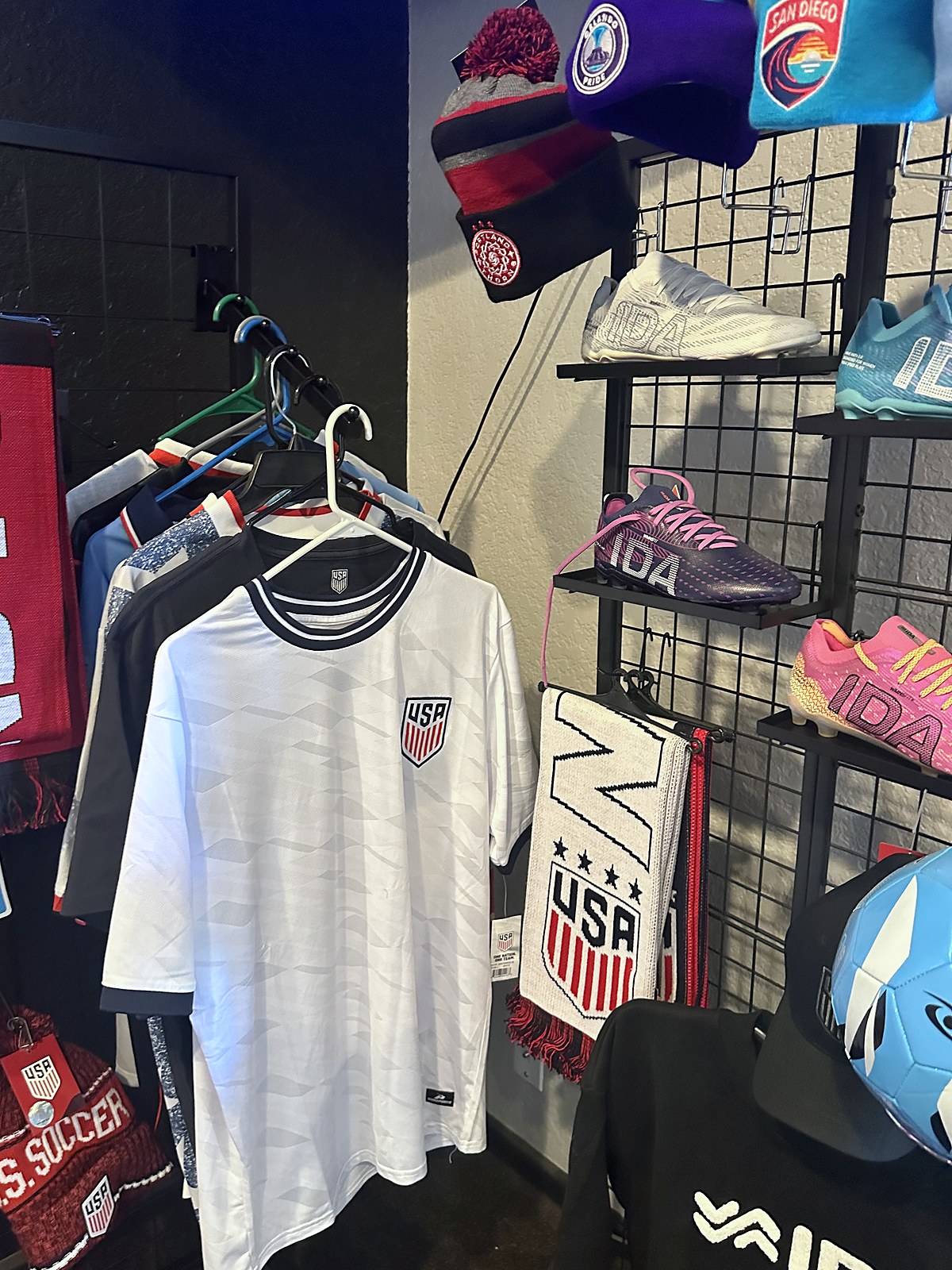
Players and families can explore the available IDA Sports women’s soccer cleats at AMH Goods.
Available pairs can also be tried on at Elite International Soccer Training at 63 S Midland Blvd, Nampa, ID 83651. Girls can take the cleats onto the facility’s turf to evaluate toe-box room, heel security, comfort, and movement before choosing a pair.
Can women-specific soccer cleats prevent ACL tears?
No cleat can guarantee that an ACL injury will not happen. ACL injuries are complex and have multiple risk factors. Women-specific cleats can be designed to address fit, pressure distribution, and rotational traction—equipment factors that may contribute to how the foot interacts with the playing surface.
IDA Sports designed its outsole with injury-risk mitigation in mind, using shorter, predominantly rounded studs intended to balance traction and rotational release.