
























A player who suddenly slips on a familiar cutback, complains that their toes feel crowded, or comes home with sore feet is sending a clearer message than any size chart. Youth cleat replacement is not just a back-to-school purchase or something to handle after a sole separates. It is part of keeping young players comfortable, confident, and ready to enjoy the game.
For families balancing club fees, practice schedules, and a growing pile of soccer gear, the goal is not to replace cleats at the first scuff. It is to recognize when the current pair no longer supports the player’s feet, field needs, or level of play. The right timing saves money compared with waiting until a worn-out pair creates a problem.
When Youth Cleat Replacement Is the Right Move
The most common reason to replace youth cleats is growth. Kids’ feet can change quickly, especially during a busy season. A cleat that fit comfortably in August may feel short, narrow, or tight across the top of the foot by late fall. Ask the player directly how their cleats feel after they have been moving, not only while trying them on in the kitchen.
Check the space at the front of the boot with the player standing. A small amount of room between the longest toe and the end of the cleat is helpful, but there should not be so much extra length that the foot slides forward when stopping. Their heel should stay reasonably secure, and the upper should not pinch the toes or leave painful pressure marks. Blisters, numbness, repeated toenail soreness, or a new reluctance to wear the cleats all deserve attention.
Wear is the other big factor. Mud and grass stains are normal. A few cosmetic scuffs are normal, too. Replacement becomes more pressing when the studs are visibly rounded down, uneven, cracked, or missing; when the soleplate starts separating from the upper; or when the upper has torn in a way that changes the fit. Look inside as well. A flattened, broken, or loose insole can make a pair feel less stable and less comfortable even if the outside still looks decent.
For a player practicing twice a week and playing one weekend game, one quality pair may last a season or longer if growth does not intervene. A player training four or five days a week, playing tournaments, or using one pair on every surface will likely wear through cleats faster. There is no universal replacement date. Their growth rate, playing volume, care routine, and field conditions all matter.
Do Not Confuse New Cleats With New Studs
Most youth soccer cleats sold in the United States have molded studs. The studs are built into the outsole, which means they are not designed to be removed and replaced one by one. If molded studs are badly worn or damaged, the practical answer is usually a new pair of cleats.
Some higher-level boots use removable studs, often called screw-in studs, for specific soft-ground conditions. Those should be handled carefully and only when the league and field allow them. For most young recreational and competitive players, molded firm-ground cleats are the straightforward, versatile choice for natural grass.
That distinction matters when searching for youth cleat replacement. A parent may be looking for replacement footwear after a growth spurt, while another may be looking for replacement studs. Knowing which one is needed prevents a frustrating purchase and gets the player back on the field faster.
Let the Field Guide the Choice
A cleat can fit perfectly and still be the wrong option for the surface. Before choosing the next pair, think about where the player actually trains and plays most often, not just the field used for a single tournament.
Firm-ground cleats are a common all-around option for outdoor grass fields. They use molded studs intended to provide traction on typical natural turf. Artificial-grass cleats have shorter, more numerous studs and can be a better match for many modern turf fields. Turf shoes use a low-profile rubber sole and are often useful for older, harder turf, indoor training spaces, or casual technical work.
Indoor soccer calls for indoor shoes with a flat, non-marking rubber outsole, not cleats. Wearing firm-ground boots on an indoor court is uncomfortable and can damage the playing surface. On the other side of the equation, using turf shoes on wet, natural grass can leave a player without enough traction.
If a child moves between grass and turf every week, it may eventually make sense to own two surface-specific pairs. That is not necessary for every family or every season. A player who spends almost all of their time on one surface is usually better served by one well-fitting pair made for that environment.
Fit Is More Than a Number on the Box
Youth cleat sizing is tricky because brands do not all fit the same way. One player may need a wider forefoot, another a snugger heel, and another more room over a higher instep. Start with the player’s current foot measurement, then use it as a starting point rather than a guarantee.
Have them try both cleats while wearing the socks they use for games. They should walk, jog lightly, bend their knees, and make a few quick changes of direction if space allows. The boot should feel secure from the first try-on. Cleats may soften slightly with wear, but a pair that is painfully tight in the store should not be bought with the hope that it will stretch into comfort.
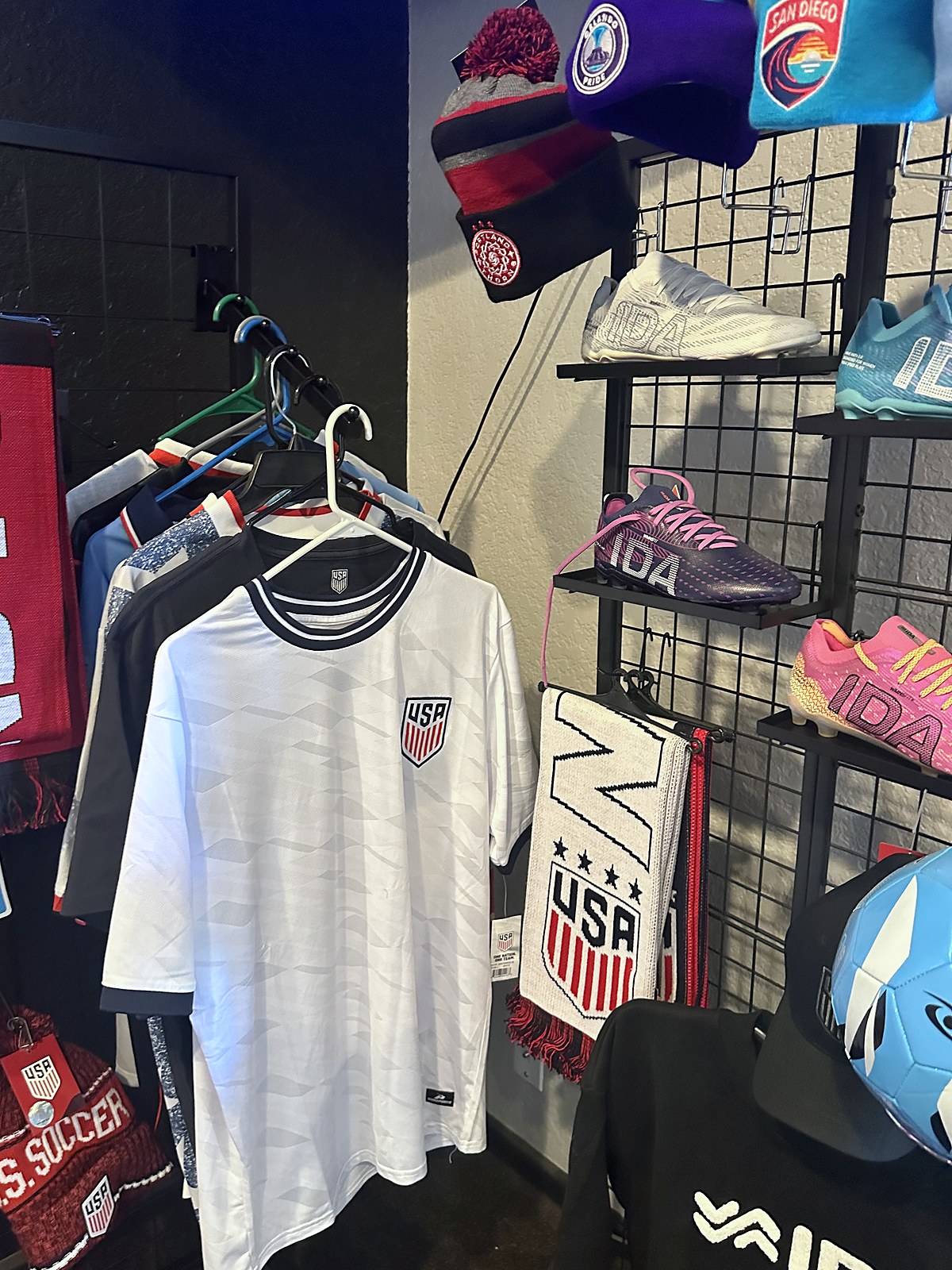
This is especially worth considering for girls and young women. For too long, soccer footwear has often been designed around a limited idea of what a soccer foot looks like. Fit needs vary from player to player, but female athletes deserve choices built with their needs in mind, not an assumption that a smaller version of a men’s boot will do. AMH Goods is proud to support that progress through its partnership with IDA Sports and a broader commitment to better access and representation in the game.
A good fit should make a player feel ready to move, not distracted by their footwear. If one brand creates heel slip and another feels secure, trust the player’s movement and comfort over the logo on the tongue.
Make the Current Pair Last Without Forcing It
A little care can stretch the useful life of a healthy pair. After practice or a game, knock off loose dirt and let the cleats air-dry at room temperature. Do not leave them in a sealed, damp bag for days, and do not place them directly on a heater. High heat can dry out materials, weaken adhesives, and distort the shape of the boot.
If they are wet, remove the insoles when possible and loosely fill the shoes with paper to absorb moisture. Clean the outsole with a soft brush, especially around the studs. It takes only a few minutes and makes it easier to spot cracks or uneven wear before game day.
It is also smart to reserve cleats for soccer. Pavement, playground concrete, and parking lots wear down studs quickly. A player can still show their club pride away from the field with a favorite jersey, tee, or track jacket while keeping their performance footwear for the surface it was made to handle.
Plan Ahead for the Busy Part of the Season
The worst time to discover that cleats no longer fit is an hour before a tournament check-in. Check fit and condition a few weeks before tryouts, preseason training, league play, or a travel weekend. That gives the player time to test the new pair in a few light sessions rather than wearing unfamiliar footwear for the first time in an important match.
New cleats should feel comfortable early, but they still benefit from a gradual introduction. Let the player wear them at a short practice or during a casual ball session first. Pay attention to hot spots, heel rubbing, and whether the laces need a different adjustment. If the fit is right, a little early use helps the boots feel familiar when the pace picks up.
The next pair of cleats is a small but meaningful piece of a young player’s season. Choose for the feet they have now, the fields they play on, and the joy that keeps them coming back to the game.